
Shoe Size Converter
Convert adult shoe sizes across major systems and learn how to measure your feet properly. Results are estimates — brand lasts still differ.
Calculate
Result
The formula
We map your input to foot length in millimetres, then to each labelling system. US/UK use Brannock-style inch formulas; EU uses Paris points (~6.67 mm); Mondopoint/CM/JP track length directly.
How to measure your feet
Measure in the afternoon (feet swell), wearing typical socks.
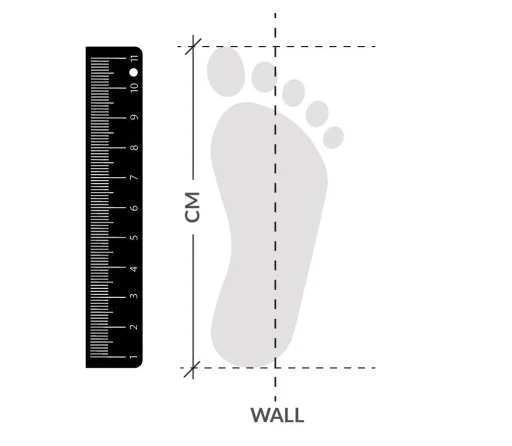
- Prep — Stand on paper against a wall, heel lightly touching the wall.
- Mark — Mark the longest toe and the back of the heel on each foot.
- Length — Measure heel to longest toe in mm. Use the longer foot.
- Width — Optional: measure the widest part of the forefoot for width fitting.
- Leave about 10–15 mm beyond the longest toe for most closed shoes.
- If between sizes, size up for sneakers.
Worked example
- EU 42 (men) → foot length ≈ 42 × 6.67 ≈ 280 mm
- Inches ≈ 280 ÷ 25.4 ≈ 11.02 in
- US ≈ 3×11.02 − 22 ≈ 11 · UK ≈ US − 1 ≈ 10
Result: About US 11 / UK 10 / 28.0 cm Mondopoint
How shoe sizes are converted
Labelling systems estimate the same underlying quantity — foot length — with different zero points and step sizes. We convert through millimetres so every chart stays consistent.
Through foot length (mm)
US men’s size ≈ 3 × foot inches − 22; women’s ≈ 3 × inches − 21. UK is offset from US (about −1 for men, −2 for women). EU size ≈ foot mm ÷ (200/30) (Paris point). CM, Mondopoint, and JP display length in cm or mm.
Gender charts
Pick men/unisex or women so US/UK offsets match the chart you are shopping. The same foot length can show different “US” numbers on men’s vs women’s scales.
Fit reality
Leave roughly 10–15 mm beyond the longest toe for many closed shoes. Width, volume, and last shape matter as much as length — two “EU 42” shoes can feel unrelated.
What we do not model
No children’s scales, no width letters (D, EE…), and no brand-specific lasts. Always confirm with the brand’s size chart when buying online.
Interesting facts
Mondopoint
Mondopoint is foot length in millimetres — a universal reference used in ski and safety footwear.
Brand variance
The same labelled size can differ by half a size between brands and lasts.
UK vs US men
Men’s UK sizes are typically about one size smaller than US (US 10 ≈ UK 9).
Measure in the afternoon
Feet swell during the day — afternoon measurements give a more realistic fit.
EU Paris point
EU sizes grow in “Paris points” of 6.67 mm; length in mm ÷ 6.67 ≈ EU size.
Frequently asked questions
We convert EU to foot length (mm), then to US using the Brannock-style formula for the chart you selected (men or women). Enter EU and choose US in the result grid.
Women’s US sizes run about 1–1.5 higher than men’s for the same foot length. Pick the chart that matches the shoes you are buying.
Yes — fit the larger foot. Many people have a half-size difference.
Mondopoint labels foot length in millimetres (sometimes with width). It is common in ski boots and safety footwear and matches our CM length closely.
Brand lasts differ. Use this converter as a starting point, then check the brand’s own millimetre chart and return policy.
References
- ISO 9407 — Mondopoint International standard for shoe sizing based on foot length (and optionally width).
- NIST — length units Exact inch/millimetre relationships used in foot-length math.
- Foot health basics General foot-health context; proper fit reduces blister and pressure issues.